Chained in Backrooms How the Chain Works
Master tether length, Pull rescues, and synced movement so your party stops yeeting itself off every ledge.
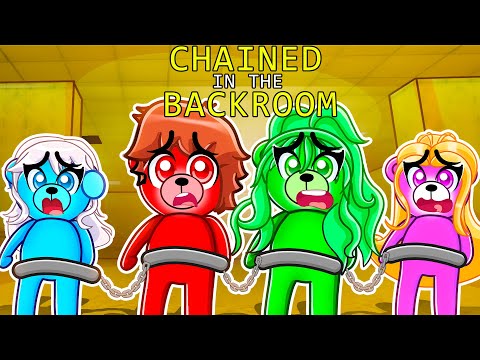
The entire fantasy of Chained in Backrooms is right in the title: you and up to seven teammates are physically chained together while solving missions. Understanding that tether matters more than raw parkour skill. This guide explains chain physics, sync habits, Pull usage, and how to play each role on the rope. Pair it with Controls for bind names and the Walkthrough for room-specific notes.
What the chain actually constrains
Think of the party as beads on a short string. Each player can move freely until they reach maximum separation from neighbors. Beyond that point the engine yanks both ends—often sideways into walls or downward off platforms. Sprint (Shift) increases how fast you hit that limit. Jumping while the rope is already taut transfers force into whoever is mid-air. That is why “I made the jump” still ends with three friends falling: the chain finished the sentence.
Solo mode still uses chain logic relative to the world and any AI partners the session spawns, but human parties feel the constraint hardest. Server size on the experience can be larger than your mission party; only your chained squad shares the tether for the active run.
Formation basics
Tight file for precision. On Tower Obby, Glass Bridge, and Train timings, stand almost shoulder-to-shoulder. Short slack means fewer surprise yanks.
Loose file for exploration. In Escape the Maze, a slightly longer spread lets the front scout corners while the rear watches for creatures—but call before stretching around two bends.
Middle carrier. If someone must hold an item or stay on an interact, put them center so either side can absorb rope force.
Never diagonal chaos. When four players pull in four directions, the center of mass goes nowhere useful. Pick a facing and commit.
Pull: the skill that separates clears from comedy wipes
Pull (controller R2 or the on-screen / keybind shown in your UI) tugs along the chain. Use it to:
- Drag a fallen teammate back onto a platform after glass breaks.
- Re-center a player who overshot a jump but is still tethered.
- Yank the group away from a creature grab if the timing window allows.
- Stop a prankster from stretching the rope into a hazard (brief counter-pull).
Bad Pull habits include spamming during calm walking (induces rubber-banding) and pulling toward the pit instead of toward safe ground. Call “Pulling now!” so jumpers do not leave the ground at the same instant.
Practice Pull in early Maze or Obby rooms before you need it on Bridge. New players who skip practice burn more time wiping than the five minutes of drills cost. More party etiquette lives on Players and role rankings on Tier List.
Sync movement checklist
- Front player sets pace; nobody passes without calling “on me.”
- After any interact (E), wait for the interact animation to end before sprinting.
- Jump on shared counts during moving platforms.
- Stop means stop—Red Light Green Light and Simon Says punish one late foot.
- If rubber-banding starts, everyone release movement for one second, then walk.
How chain length changes decision-making
Some missions hint that larger parties help because you may need to sacrifice spacing, block a path, or leave someone as weight while others progress. Those moments are intentional design, not griefing—if the group agrees. Randomly stretching a friend into lava is still griefing. Discuss sacrifice puzzles before the timer appears.
Creature rooms flip the logic: a long chain creates more hitboxes for AI to clip. Tighten up, crouch when needed (C), and move as a blob through chase lanes. Details in Survive Creatures.
Device and latency notes
High ping amplifies rubber bands. If one player is on mobile hotspot and the rest on wired PC, put the unstable connection in the middle so their jitter does not whip both ends. Mobile touch Pull can feel delayed—bind awareness from the Controls guide helps. Controllers map Pull to R2; confirm the prompt in your session because UI text can vary after updates.
Common failure patterns (and fixes)
| Symptom | Likely cause | Fix |
|---|---|---|
| Whole squad falls after one miss | Rope taut during jump | Wait for slack; Pull instead of leapfrog |
| Constant micro-stutters | Two players strafing opposite | Pick one strafe direction |
| Interact canceled | Chain dragged player off prompt | Hold position while one interacts |
| Bridge cascade | Everyone rushed broken glass | Scout + Pull recovery |
| Boss wipe | Spread too far for heals/tools | Tighten file; focus fire |
How to practice without burning the night
Run a private-ish lobby with friends and only clear Maze + Obby twice while narrating rope tension. Then attempt Tower Obby once as a drill. Watch the embedded gameplay video for visual examples of good vs bad spacing, then retry. When the chain finally “feels quiet,” you are ready for Glass Bridge and bosses in the Walkthrough.
Tie-ins to the rest of the wiki
- New accounts: Getting Started for group reward and party size.
- Input details: Controls.
- Chapter 2 puzzles still use the same tether—lava lanes punish stretch hard; see Chapter 2.
- Patch changes to physics: Updates.
- Place / group links: Official Links.
- Codes status: Codes.
- Tooling talk: Scripts (stay ToS-safe).
Mastering the chain turns Chained in Backrooms from a yelling simulator into a co-op puzzle game that happens to wear horror clothes. Move together, Pull with intent, and treat slack as a resource you manage every room.
Frequently Asked Questions
Quick answers to the most common questions.
Why do we fall when only one person missed a jump?
A taut chain transfers force. If the rope is stretched when someone falls, neighbors get yanked. Wait for slack or Pull them up before the next jump.
What does Pull do?
Pull tugs along the tether to rescue fallen players, recenter the group, or counter bad stretches. On controllers it is commonly R2.
Is a bigger party always better?
Not always. Eight players add comedy and sacrifice options but increase rope noise. Three to five coordinated players often clear cleaner.
Should we sprint everywhere?
No. Sprint only when the whole chain has clear footing. Sprint into a corner and you invent new ways to clip the wall.
Does solo remove the chain?
You can queue alone, but the game remains built around tethered mission logic. Solo clears are slower and less forgiving on Pull rooms.
Where do I learn room-by-room application?
Use this page for physics, then apply it inside the Walkthrough and Chapter 2 guides during live runs.